Key Takeaways
- Lethal bronzing is a bacterial disease spread by a small insect, and it has been confirmed in palm populations throughout the Treasure Coast, including Vero Beach.
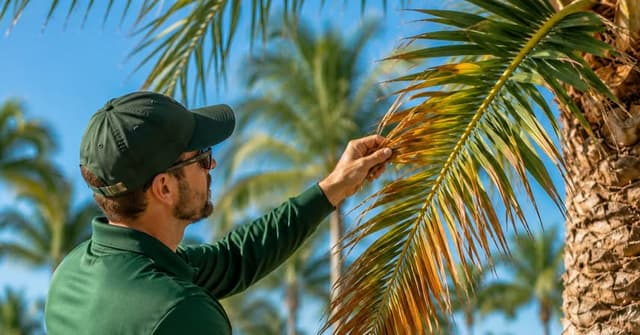
- The disease gets its name from the distinct bronze or reddish-brown discoloration that spreads through the fronds, usually from the oldest leaves upward.
- Once symptoms reach the newest emerging spear leaf, the palm’s chances of recovery drop significantly.
- Early detection and prompt antibiotic treatment give a palm its best chance of survival.
- Promptly removing severely infected palms helps protect nearby healthy palms, since the disease spreads via an insect vector.
If you’ve noticed a palm in your yard turning an unusual bronze or rust color starting at the bottom of the canopy, it’s worth taking seriously. Lethal bronzing has become an increasingly common problem for palms along the Treasure Coast, and Vero Beach has seen its share of cases in recent years. The disease moves through a palm in stages, and by the time it’s obvious to an untrained eye, the tree may already be past the point where treatment can help. Knowing what to look for early, and what your options are once symptoms appear, can make the difference between saving a mature palm and losing it.
What Is Lethal Bronzing?
Lethal bronzing is a disease caused by a phytoplasma, a bacteria-like organism, that’s spread from palm to palm by a small planthopper insect. It affects a wide range of palm species found throughout Florida landscapes, including sabal palms (the state tree), Christmas palms, queen palms, and several others common in Vero Beach yards and along the coast. The disease was first identified in Texas and has since spread through much of Florida, moving further along the coast as the insect vector carries it between trees.
The Progression: How Lethal Bronzing Spreads Through a Palm
Understanding the typical progression is the key to catching it early. In most cases, symptoms begin in the oldest fronds, the ones lowest in the canopy, and move upward through the tree over a period of weeks to a few months. The oldest leaves develop a reddish-brown or bronze discoloration, often starting at the tips and spreading toward the base of the frond. As the disease advances, this discoloration moves into progressively younger fronds. The most critical stage to watch for is when the spear leaf, the newest, still-unopened leaf at the very top of the canopy, begins to discolor or fails to open properly. Once the spear leaf is affected, the palm’s bud, the single growing point that produces all new growth, is usually already compromised, and recovery becomes far less likely.
Early Warning Signs Worth Watching For
Before the more obvious bronzing appears, a few subtler signs can show up first.
- Premature fruit drop, where a palm sheds developing fruit well before it should, is one of the earliest indicators in fruiting species.
- A general thinning or yellowing of the lower canopy that doesn’t match typical nutrient deficiency patterns is another.
- Because these early signs can resemble other palm health issues, like potassium or magnesium deficiency, an accurate diagnosis usually requires a trained eye, and in some cases lab testing of a tissue sample.
Why Vero Beach Palms Are Particularly at Risk
The Treasure Coast’s dense palm plantings, combined with a climate that supports the insect vector year-round, create favorable conditions for the disease to spread between properties.
Sabal palms, which are extremely common throughout Vero Beach landscaping, are among the species affected, and because they’re so widely planted, a single infected tree in a neighborhood can put nearby palms at meaningfully higher risk. The insect that spreads the disease doesn’t require direct root contact between trees, it simply needs to move from an infected palm to a healthy one, which means proximity within a yard or across a property line matters.
Which Palm Species Around Vero Beach Are Most Vulnerable
While lethal bronzing can affect a wide range of palm species, some are more commonly diagnosed than others in this region.
- Sabal palms, given how frequently they’re planted throughout Vero Beach as both a native and widely used landscape tree, account for a large share of confirmed cases simply due to their prevalence.
- Christmas palms and queen palms, both popular ornamental choices in Treasure Coast landscaping, are also frequently affected and, in some cases, show symptoms more rapidly than sabal palms once infected.
- Coconut palms, while less common this far north in Florida, can also be affected where they’re planted. Knowing which species you have on your property is a useful starting point for understanding your relative risk level, though no commonly planted palm species should be considered immune.
Why Misdiagnosis Is a Common Problem
Because the early symptoms of lethal bronzing can resemble several other palm health issues, nutrient deficiencies, particularly potassium or magnesium deficiency, being the most common look-alikes, property owners sometimes spend weeks or months applying fertilizer treatments meant for a nutrient problem before realizing the actual cause is a disease that fertilizer can’t address. This delay matters because it eats into the treatment window during which antibiotic injections are most likely to be effective.
A professional tree service firm in Vero Beach, FL can perform a detailed assessment that covers the specific pattern of symptoms, rather than treating any yellowing or discoloration as a generic nutrient issue, is the more reliable path to an accurate diagnosis.
Can an Infected Palm Be Saved?
It depends heavily on how early the disease is caught. Palms treated with antibiotic injections before symptoms reach the spear leaf have a meaningfully better chance of recovery than palms treated after the bud is compromised. The treatment involves trunk injections of an antibiotic (most commonly oxytetracycline) on a repeating schedule, since the treatment suppresses the phytoplasma rather than eliminating it outright, and ongoing injections are typically needed to keep protecting the tree. This is not a one-time fix, it’s an ongoing management plan for a palm that’s been exposed to or affected by the disease, and it works best as a preventive measure for healthy, high-value palms in areas where lethal bronzing has already been confirmed nearby.
When Removal Is the Right Call
Once a palm’s spear leaf has collapsed or failed to emerge, the growing point is usually dead, and no treatment can bring back a bud that’s no longer functioning. At that stage, the palm has no path to recovery, and removal becomes the responsible option, both for the safety of a tree that will continue to decline and for the health of surrounding palms, since a severely infected tree can continue to serve as a source for the insect vector to spread the disease further. Prompt removal of a palm past the point of saving is one of the more effective things a property owner can do to protect the rest of their landscape.
A Prevention and Monitoring Plan Matters as Much as Treatment
Lethal bronzing spreads through an insect vector rather than through soil or root contact. Thus, monitoring every palm on a property, not just those showing symptoms offers the best chance of detecting new infections early. For properties with several mature palms, scheduling periodic health inspections, especially during the warmer months when the insect vector is most active, is a smart part of routine landscape maintenance in areas where the disease is present.
At Treasure Coast Tree & Land Services, we specialize in identifying and managing lethal bronzing in palms across Vero Beach and the surrounding Treasure Coast. Our experienced team performs thorough evaluations to detect early signs of the disease and recommends the most effective solution, whether that’s treatment to preserve a healthy palm or safe removal to protect nearby trees. Because early intervention offers the best chance of saving an infected palm, we encourage property owners to schedule an inspection as soon as they notice unusual browning or discoloration. Acting quickly can make all the difference. Call our team now at (772) 404-3414 to Book Your Free Estimate !!
Frequently Asked Questions About Lethal Bronzing by the Homeowners in Vero Beach, FL
How can I tell the difference between lethal bronzing and a nutrient deficiency?
Nutrient deficiencies tend to produce more uniform yellowing or specific patterns tied to the deficient element, while lethal bronzing typically starts with bronze or reddish discoloration in the oldest fronds and progresses upward. A professional assessment is the most reliable way to tell them apart.
Is lethal bronzing contagious to other trees or plants in my yard?
It only affects palms, and it spreads via an insect vector rather than root contact, but a symptomatic palm nearby can increase risk to other palms on the property over time.
Can a healthy-looking palm still have lethal bronzing?
Yes, especially in early stages before symptoms are visually obvious, which is part of why proactive monitoring matters for palms in areas where the disease has been confirmed.
How often does a treated palm need antibiotic injections?
Treatment is typically administered on a repeating schedule, often every four to six months, since the injections suppress the disease rather than curing it permanently.
What should I do if I think my palm has lethal bronzing?
Have it assessed as soon as possible. The earlier the disease is identified, especially before the spear leaf is affected, the better the chances of successful treatment.
Summary Checklist: Recognizing and Responding to Lethal Bronzing
| Stage | What to Look For | Recommended Action |
| Early | Premature fruit drop, subtle lower canopy thinning | Schedule a professional assessment |
| Progressing | Bronze or reddish discoloration moving up the canopy | Begin antibiotic treatment promptly |
| Advanced | Spear leaf discoloration or failure to open | Discuss removal to protect surrounding palms |
| Prevention | Healthy palms near confirmed cases | Consider a monitoring or preventive treatment plan |
Final Advice
Lethal bronzing can progress quickly once symptoms become visible, making early action essential for protecting valuable palms in Vero Beach. If you notice unusual bronze discoloration, premature fruit drop, or changes in your palm’s newest growth, schedule a professional evaluation before the disease advances. Early detection provides the best opportunity for treatment, while timely removal of severely infected palms helps reduce the risk of spreading the disease to nearby trees. Regular monitoring and proactive care are the best ways to maintain healthy palms throughout the Treasure Coast.