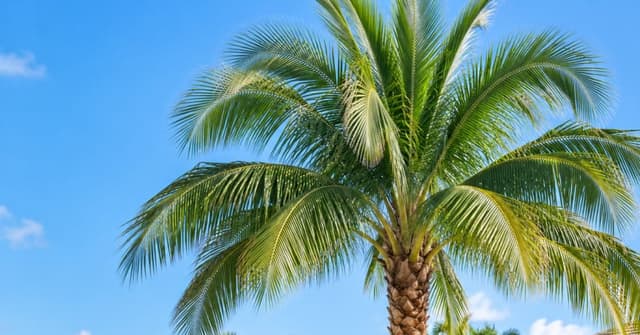
A palm with most of its canopy removed can look neat from a distance, especially if that appearance has become familiar in the neighborhood. Familiar does not mean healthy. If you have wondered why palms should not be topped, the answer starts with how a palm grows and what happens when its crown or green fronds are removed.
We never top palms because cutting through the crown can destroy the growing point that produces every future frond. We also do not promote destructive hurricane cuts that leave a small upright tuft. Topping and hurricane cutting are different practices, but both can cause serious harm.
Responsible palm pruning is selective. It removes material that is dead, broken, loose, or hazardous while preserving a full green canopy and protecting the crown. That approach matters in Vero Beach, where palms already contend with hurricanes, tropical storms, coastal wind, salt exposure, sandy soils, high humidity, lightning, and palm-specific diseases.
Why Topping Is Especially Destructive to Palms
Live oaks, laurel oaks, and other branching trees grow from many buds across a branching canopy. Palms are built differently. Most common single-trunk landscape palms produce new leaves from one terminal bud, or growing point, at the top of the trunk. That growth pattern is the main reason why palms should not be topped.
Every new frond in the crown originates from that point. If the trunk is cut below the crown or the terminal bud is destroyed, the palm cannot respond by growing a new leader or replacement branches. Future leaf production stops.
The result may be immediate death, gradual decline, or crown collapse, depending on the damage. A palm may remain standing for a time even though normal recovery is no longer possible. For common single-trunk palms, cutting the top off is not height reduction. It is often fatal damage.
There are palms with multiple stems or different growth habits, so broad statements should be applied with care. This article focuses on the single-trunk sabal, royal, queen, coconut, washingtonia, foxtail, and date palms commonly seen in Treasure Coast landscapes. Species identification is one reason our team evaluates a palm before recommending work.
Never attempt to shorten a tall palm by cutting its trunk. Do not climb to inspect the terminal bud or make cuts near the crown. Work at that height, especially near a home, pool enclosure, walkway, or utility line, belongs with qualified professionals using appropriate access and safety equipment.
Topping and Over-Pruning Are Not the Same Practice
Topping destroys or severely damages the crown, terminal bud, or single growing point. A hurricane cut usually leaves that growing point in place but removes far too many healthy fronds. Both are harmful, but the biological damage is not identical.
Topping can end future growth completely. Severe over-pruning reduces the living canopy the palm uses to make energy and recycle nutrients. Repeating an extreme trim can weaken growth over time even when the bud survives.
You may recognize damaging palm work by these signs:
- The entire crown has been cut off
- Only a few upright fronds remain
- Green fronds have been removed below or within a healthy canopy
- The crown resembles a feather duster, pencil point, or rooster tail
- Leaf bases or trunk tissue have been aggressively shaved
- Climbing spikes have punctured a living palm
- Cuts or tears are visible close to the crown
Routine maintenance should not reduce palm height by cutting the trunk. It should not strip the canopy to a decorative tuft or remove green foliage simply to create a uniform look. Palms of different species, sizes, and health conditions should not all leave a property with identical crowns.
Aggressive trunk shaving can also injure tissue and create unnecessary wounds. Climbing spikes puncture a living trunk and should not be used for routine pruning. Once that damage is made, the palm does not repair it like a branching hardwood might close around a small wound.
Why Hurricane Cuts Do Not Make Palms Safer
The phrase “hurricane cut” sounds preventive, which is why many property owners have requested it in good faith. The usual practice removes most green fronds and leaves a small cluster pointing upward. Current UF/IFAS palm-pruning guidance does not support that approach as hurricane protection.
Healthy fronds create energy through photosynthesis. Older green and partially green fronds may also contain nutrients that the palm is still using. Removing those leaves reduces the palm’s working canopy when it needs that canopy to support new growth and maintain the crown.
Repeated palm over-pruning can lead to smaller leaves and narrower trunk growth. UF/IFAS also reports observations that hurricane-cut palms may be more likely to suffer crown breakage in severe wind. The tender newest fronds and growing point have less surrounding foliage when older healthy fronds are stripped away.
A full green canopy is not the same as a neglected canopy. Proper pre-storm maintenance may still address:
- Completely dead fronds
- Broken or partly detached fronds
- Loose material above people or property
- Fruit or seed stalks that create a hazard
- Existing crown or trunk damage that needs evaluation
Removing hazardous material is reasonable. Removing most of a healthy canopy in the name of wind resistance is not. No pruning method can hurricane-proof a palm or guarantee survival in a tropical storm.
Why Green and Yellowing Fronds Matter
Green fronds should remain whenever practical because those leaves are actively supporting the palm. A frond does not become disposable because it sits low in the canopy or looks less tidy than the newest growth.
Yellow or partially green fronds also should not be removed automatically. Palms can move mobile nutrients from older leaves into newer growth. Cutting a yellowing frond too early may remove nutrients that the palm is still recycling and further reduce the remaining canopy.
Discoloration can also be useful evidence. Yellowing, spotting, bronzing, or an unusual pattern across the canopy may point to a palm nutrient deficiency, disease, insect problem, root stress, or another health concern. Removing symptomatic leaves before an assessment can hide clues that help identify the cause.
That does not mean every yellow frond signals a serious disease. Some palms show normal aging or species-specific color changes, while others may have potassium, magnesium, manganese, or other nutrient problems. The pattern, location, and progression matter.
If several fronds are changing color, the central spear looks abnormal, or the crown is thinning, more aggressive pruning is usually not the answer. Our team may recommend a palm health evaluation, plant healthcare, monitoring, or a more detailed arborist consultation. Lethal bronzing and ganoderma require separate discussion, so the related plant-health pages should carry that detail.
What Responsible Palm Pruning Looks Like
Better palm pruning begins with a reason for every cut. We evaluate the species, crown, trunk, health, frond condition, location, and what is below the palm before deciding what should come off.
Responsible professional pruning may include:
- Removing completely dead fronds
- Removing clearly broken or hazardous fronds
- Addressing loose fronds above people, roofs, pool decks, driveways, or walkways
- Removing flower or fruit stalks when their location creates a concern
- Preserving healthy green fronds
- Protecting the terminal bud and crown
- Avoiding cuts into the trunk
- Avoiding forced tearing of attached fronds
- Avoiding unnecessary climbing-spike wounds
- Using clean equipment suited to the palm and the site
- Cleaning up removed fronds, fruit, and related debris
The clock-face guideline is often misunderstood. Picture the palm crown as a clock, with 9 o’clock and 3 o’clock forming a horizontal line. UF/IFAS describes this as an absolute pruning limit, not a target that every trim should reach. Its guidance explains that healthy green fronds above this horizontal plane should not be removed simply to create a particular crown shape. See the UF/IFAS guidance on proper palm pruning.
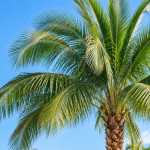
A healthy palm should generally keep a full, rounded canopy with as much green foliage as practical. If green fronds extend below the horizontal line and remain healthy, their position alone does not mean that removal is necessary. Completely brown material can be evaluated based on safety, appearance, and how the species naturally sheds old leaves.
Cuts should not enter the trunk or damage the crown. Fronds should not be ripped away when firmly attached. For tall palms, heavy fronds can fall with enough force to damage property or seriously injure someone, so pruning above structures and high-use areas is not a safe do-it-yourself job.
UF/IFAS also recommends that landscape professionals follow current palm-pruning practices, avoid damaging living trunk tissue, and retain healthy palm leaves when possible. Its Florida-Friendly landscaping guidance for palm pruning provides additional professional pruning recommendations.
Different Vero Beach Palms Need Different Care
Palm species differ in how each species holds old fronds, produces fruit, responds to nutrition, and faces local disease pressure. One aggressive standard cannot be applied across an entire property.
Sabal palms, also called cabbage palms, often retain old leaf bases and may hold dead fronds around the trunk. That does not mean the healthy canopy needs thinning. Our separate cabbage-palm seasonal guide explains when routine maintenance makes sense without repeating that timing discussion here.
Royal and foxtail palms have crownshafts and are generally considered self-cleaning. Older fronds often release naturally. Falling fronds can still be heavy, so the area below and the condition of attached material deserve attention, but routine removal of green leaves is not necessary.
Queen palms may retain dead foliage and can show pronounced nutrient problems in poor conditions. Yellowing on a queen palm should prompt a closer look before additional fronds are removed.
Coconut palms produce heavy fruit, and location matters when coconuts hang above a driveway, pool deck, entrance, or parking area. Fruit management may be part of safe maintenance even when the green canopy is left intact.
Washingtonia palms can retain old fronds in a skirt below the crown. Date palms have different leaf bases, fruiting habits, and access concerns. Both require careful work around sharp or heavy material, and neither benefits from stripping healthy green fronds.
Species is only one factor. A foxtail with a declining spear, a sabal with lethal bronzing symptoms, and a healthy royal dropping an old frond are three different situations. Our recommendations should reflect the actual palm rather than a standard appearance.
When Palm Pruning Is Appropriate
Conservative does not mean never pruning. Professional work can improve safety and appearance when the palm has material that is ready or necessary to remove.
Pruning may be appropriate when:
- Completely dead fronds remain attached
- Broken fronds hang above a walkway, driveway, pool deck, roof, or screen enclosure
- Heavy fruit or seed stalks create a falling hazard or obstruct access
- Storm-damaged material remains loose in the crown
- Dead fronds interfere with visibility or safe movement
- The palm needs closer evaluation for crown damage or disease
The decision is based on condition rather than a routine demand to take off a set number of fronds. A palm may need only one hazardous frond removed. Another may need no pruning at all because its old fronds are releasing naturally.
Do not stand beneath a loose frond, use a pole saw near utility lines, or climb a tall palm to check whether material is attached. Contact the utility provider first if any frond or trunk is close to an electrical line. Qualified professionals should handle high work, heavy material, and pruning around structures.
When the Problem Is More Than Pruning
Some palms look untidy because dead material is present. Others look thin or uneven because the crown, trunk, roots, or growing point is failing. Cutting off more fronds will not correct a structural or health problem.
The palm may need further assessment when:
- The central spear is loose, collapsed, discolored, or missing
- The terminal bud or crown has been cut or badly damaged
- The trunk is soft, cracked, wounded, or becoming narrow
- The palm leans and the soil or root zone is moving
- A fungal conk or other sign of Ganoderma butt rot appears near the base
- Bronzing and crown decline suggest advanced lethal bronzing
- Lightning or a storm has caused extensive damage
- The palm is dead or cannot be made reasonably safe
Our team may recommend monitoring when the palm is stable and the outcome is not yet clear. Plant healthcare may be appropriate for a treatable nutritional, pest, or disease problem. An arborist consultation can provide a closer evaluation when the diagnosis or risk is uncertain.
Removal may be the responsible recommendation when the growing point is destroyed, the trunk or roots are failing, a fatal disease is advanced, or the palm creates an unacceptable hazard. We do not assume every damaged palm must come down. The decision depends on species, health, structure, location, and what the palm could strike.
Why Professional Palm Pruning Matters in Vero Beach
Vero Beach palms grow through most of the year, but growth does not protect a palm from stress. Sandy soils can lose nutrients, coastal wind and salt can affect foliage, and high humidity can support disease pressure. Hurricanes, tropical storms, microbursts, and lightning add another layer of risk.
Local palm knowledge helps separate a pruning need from a health or structural problem. A yellowing frond may be recycling nutrients. A loose royal palm frond may be close to natural release. A narrowing queen palm trunk may reflect a longer history of stress. A collapsed spear can point to a serious crown problem.
Our palm specialists work with sabal, royal, queen, coconut, washingtonia, foxtail, and date palms across the Treasure Coast. We combine species-appropriate pruning with an evaluation of the crown, trunk, root area, and property below. Removed material is cleaned up as part of the approved service.
This article explains why palm topping and over-pruning are harmful. The Palm Specialist Services and Tree Trimming and Pruning pages should explain the broader range of services, while the plant-health and removal pages should cover those needs in depth.
Request Proper Palm Pruning in Vero Beach
If your palm has a feather-duster crown, yellowing fronds, hanging material, heavy fruit, trunk damage, or an abnormal central spear, do not assume that a harder trim will solve the problem. Our team can determine whether the palm needs conservative pruning, plant healthcare, monitoring, additional assessment, or removal.
Call Treasure Coast Tree & Land Services at (772) 404-3414 or use the contact option on our website to request a free estimate in Vero Beach. We also serve surrounding Indian River County and Treasure Coast communities.
We will evaluate the palm before recommending work, preserve healthy green foliage whenever practical, protect the crown, and clean up the removed material. If you are unsure what should stay and what should go, an on-site assessment is the safest place to start.