Key Takeaways
- Cabbage palms (Florida’s state tree, also called sabal palms) need far less pruning than most homeowners assume.
- Over-trimming, especially the “hurricane cut” that leaves only a small tuft of fronds, weakens the palm rather than protecting it.
- Green, healthy fronds should generally stay on the tree; only fully brown, dead fronds need to come off.
- The best time to trim is tied to what the fronds are doing, not a strict calendar date, though late spring through early summer works well for most routine maintenance.
- Removing fronds too aggressively can strip nutrients the palm needs and expose the trunk to sun and pest damage.
Cabbage palms are everywhere on the Treasure Coast, lining driveways, framing waterfront views, and standing as some of the oldest living features on many properties. They’re also one of the most frequently over-pruned trees in Florida landscaping, not because homeowners are careless, but because the “hurricane cut” look, where only a small tuft of fronds remains at the top, has become so common that many people assume it’s the correct or even required way to trim a palm. It isn’t, and understanding why can add years of healthier growth to your palms.
Why Cabbage Palms Get Over-Trimmed So Often
Part of the problem is visual habit. A heavily trimmed palm has a tidy, sculpted look that reads as “maintained” to a lot of property owners, and it’s become a common request from clients who want that specific aesthetic. The other part is a persistent myth that removing more fronds reduces wind resistance and storm risk. In reality, cabbage palms are naturally well adapted to high wind; their trunks are flexible, and their canopy is designed to shed and bend rather than resist wind head-on. Stripping the canopy down to a tuft does very little to reduce storm risk while doing real harm to the tree’s health.
What Over-Pruning Actually Does to the Cabbage Palms
Unlike a typical broadleaf tree, a palm has a single growing point at the top, the bud, and it relies on a full, healthy canopy of green fronds to produce the energy that supports new growth.
- Damages the Cabbage Palm’s Energy Supply
Green fronds continue producing energy through photosynthesis, even if they look slightly worn. Removing them too early reduces the cabbage palm’s ability to support healthy growth.
- Slows Growth and Weakens the Tree
Since cabbage palms have a single growing point (the bud), they depend on their canopy for nutrients. Over-pruning forces the palm to use stored energy, which can slow growth and reduce long-term vigor.
- Increases Sun and Weather Exposure
A heavily thinned canopy leaves the trunk and crown more exposed to direct sunlight, wind, and other environmental stresses.
- Raises the Risk of Pests and Nutrient Problems
Over-pruned cabbage palms are more susceptible to certain pests and nutrient deficiencies because the reduced canopy limits the tree’s natural ability to stay healthy.
Only Remove Fully Brown Fronds
The most reliable guideline for cabbage palm pruning isn’t a date on the calendar; it’s the color and condition of the frond itself.
- A frond that’s fully brown and dead, sometimes referred to as being at “9 o’clock” or lower relative to horizontal, is ready to come off.
- Fronds that are still green, or even partially green with some yellowing or browning at the tips, should generally stay. This “self-cleaning” approach lets the palm keep photosynthesizing through as much of its canopy as possible for as long as each frond is contributing, and it naturally avoids the over-thinned look that weakens the tree.
Seasonal Guidance for the Treasure Coast
While the frond-condition rule matters more than the calendar, there are still some seasonal considerations worth factoring in for palms in this region.
- Late Spring Through Early Summer
This is generally the best window for routine maintenance pruning. Growth has resumed after any winter slowdown, and removing dead fronds at this point helps the palm look its best heading into the peak growing and storm season without cutting into fronds that still have life left in them.
- Hurricane Season (June Through November)
Resist the urge to do a heavy “storm prep” trim during this period. As covered above, removing extra green fronds doesn’t meaningfully reduce storm risk and can leave the palm with less energy reserve heading into a season that already puts stress on the tree. Routine dead-frond removal is fine; aggressive thinning is not.
- Fall and Winter
Growth slows during cooler months, and fronds take longer to fully brown and die back. This is a reasonable time for a lighter touch, removing only fronds that are unmistakably dead, and holding off on anything more until the palm’s growth picks back up in spring.
Cabbage palms produce flower stalks and fruit that many species of birds and pollinators rely on. While this isn’t a hard rule for every situation, timing routine pruning around these periods, rather than removing flower or fruit stalks unnecessarily, supports the broader ecological value the palm provides in the landscape.
Other Common Pruning Mistakes Beyond Over-Trimming
While the hurricane cut is the most visible mistake, a few other habits can also work against a cabbage palm’s health. Here are the common pruning mistakes to avoid –
- Using Climbing Spikes
Climbing spikes puncture the palm’s trunk, creating permanent wounds because palms cannot seal or compartmentalize this type of damage.
- Use the Right Access Methods
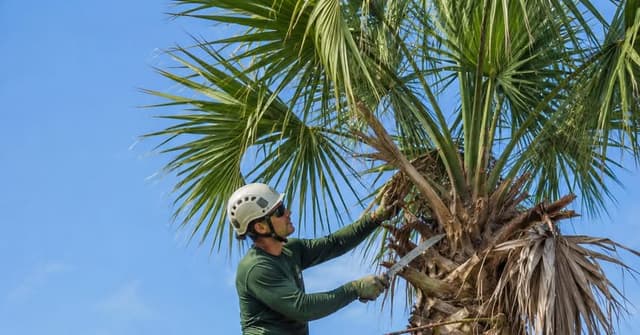
Professional crews use bucket trucks, ladders, or rope-and-saddle climbing techniques that allow safe pruning without injuring the trunk.
- Don’t Cut Fronds Flush to the Trunk
Removing fronds too close to the trunk can damage living trunk tissue. An appropriate stub should be left to protect the palm.
- Proper Pruning Prevents Long-Term Damage
Using correct pruning techniques helps preserve the palm’s structural integrity, reduces unnecessary injuries, and supports long-term health.
What a Proper Trim Should Look Like When It’s Done
A correctly pruned cabbage palm should retain a full, rounded canopy, generally described as anything from a slightly trimmed full circle down to a horizontal cut line, never narrowed down to a small tuft at the crown. If you can see mostly sky through the top of the palm after a trim, more was removed than should have been.
At Treasure Coast Tree & Land Services, we believe healthy cabbage palms start with proper pruning, not excessive trimming. Our team evaluates each palm individually, removing only fully dead fronds while preserving the healthy canopy the tree needs to thrive. We avoid harmful practices like hurricane cuts and climbing spikes that can weaken or permanently damage palms.
Using industry-recommended pruning techniques and professional equipment, we help protect your palms from unnecessary stress, pests, and nutrient loss. Whether your palms need routine seasonal maintenance or an expert assessment, we provide tree care tailored to Florida’s growing conditions. Our goal is to keep your cabbage palms healthy, attractive, and better prepared for hurricane season and the years ahead. Call our team at – (772) 404-3414 to Book Your Free Estimate !!
Frequently Asked Questions About Trimming Cabbage Palms by Homeowners in Vero Beach, FL
Is it true that trimming palms before hurricane season reduces storm damage?
Not meaningfully. Cabbage palms are naturally wind-adapted, and stripping healthy green fronds reduces the palm’s energy reserves without providing much real protection against wind.
Can over-trimming actually kill a palm in Vero Beach, Florida?
It’s uncommon for a single trim to kill a healthy palm outright, but repeated aggressive over-pruning stresses the tree over time and can make it more vulnerable to pests, disease, and storm damage.
How often should a cabbage palm be trimmed?
It depends on the individual tree, but for most properties, checking once or twice a year and removing only fully dead fronds is sufficient. There’s no need for frequent heavy trimming.
Why does my palm look thin and sparse after a “hurricane cut”?
That look comes from removing green, still-living fronds along with dead ones, which strips more of the canopy than the palm needs to lose and can leave it visibly weakened.
Should I remove the old frond boots on my palm’s trunk?
It’s optional and mostly a matter of appearance. If you’d like them removed, it should be done carefully by someone familiar with palm trunk tissue to avoid unnecessary damage.
Summary Checklist: Cabbage Palm Trimming Guide
| Season | Recommended Approach |
| Late spring / early summer | Best window for routine maintenance pruning |
| Hurricane season (June–Nov) | Remove only fully dead fronds, avoid heavy thinning |
| Fall / winter | Lighter touch, growth is slower, fewer fronds ready |
| Anytime | Only remove fully brown, dead fronds regardless of season |
Final Advice
Cabbage palms stay healthier and stronger when they are pruned conservatively rather than aggressively. Focus on removing only fully brown, dead fronds, and allow healthy green fronds to continue supporting the palm through photosynthesis. Avoid the common “hurricane cut,” as it weakens the tree instead of improving storm resistance. Timing also matters, with late spring through early summer generally being the best period for routine maintenance. Regular inspections can identify dead fronds, structural issues, or nutrient concerns before they become larger problems.
Proper pruning techniques also help prevent unnecessary trunk damage and reduce long-term stress on the palm. If you’re unsure whether your cabbage palm needs trimming, a professional assessment is the safest approach. Caring for your palms with the right techniques today can improve their appearance, resilience, and overall health for many years to come. Book Your Free Estimate now by calling our team at (772) 404-3414.