Key Takeaways
● Hurricane season along the Treasure Coast runs roughly June through November, making spring the ideal window for storm-prep pruning.
● Wind resistance has as much to do with canopy density and structure as it does with a tree’s overall size.
● Certain structural issues, like co-dominant stems, deadwood, and root damage, make a tree far more likely to fail during high winds.
● Selective pruning and cabling can meaningfully reduce storm risk without harming the tree.
● Palms have different pruning needs than broadleaf trees and should never be over-trimmed before a storm.
● A pre-season inspection from a certified arborist is the most reliable way to catch problems before a storm finds them for you.
Vero Beach, Florida’s warm, humid climate and coastal exposure make it a beautiful place to grow trees, but that same environment puts local trees squarely in the path of hurricane season every year. A tree that looks perfectly healthy on a calm day can become a serious hazard once sustained winds and heavy rain move through. An experienced arborist in Vero Beach, FL can assist you in taking a proactive approach before storm season arrives to protect your home, your family, and your landscape.
Why Pre-Season Preparation Matters
Once a storm is approaching, options for tree work narrow considerably, and demand for tree services spikes. Preparing trees well ahead of hurricane season, ideally in spring before the season’s typical June start, gives a tree time to respond to pruning and gives your property owner time to address issues discovered during an inspection.
Warning Signs a Tree May Not Hold Up in High Winds
Not every tree carries the same level of storm risk. Certain structural and health issues make a tree considerably more likely to fail during a hurricane or tropical storm.
● Co-dominant stems or narrow branch unions, which are more prone to splitting
● Visible deadwood or dead branches throughout the canopy
● Cavities, cracks, or fungal growth on the trunk or major limbs
● Root damage, soil heaving, or exposed roots near the base
● Dense, overgrown canopies that catch more wind than a properly thinned one
● A history of previous storm damage that was never fully addressed
Pre-Season Pruning Strategies
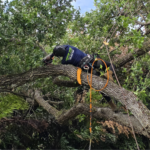
Proper pruning before the season begins helps trees stay healthy, strong, and prepared for changing weather conditions. Strategic trimming can encourage healthy growth, improve structure, and reduce the risk of damaged branches.
- Canopy Thinning
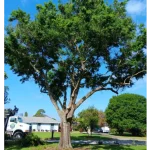
Selectively removing some interior branches allows wind to pass through the canopy rather than pushing against a dense wall of foliage, which reduces the overall stress placed on the tree during high winds.
- Crown Reduction
For trees that have grown too large for their space or are top-heavy, a proper crown reduction, done according to industry pruning standards, can lower the tree’s overall wind profile without leaving stubs or unnatural cuts.
- Deadwood Removal
Dead and dying branches are among the first things to break loose in high winds. Removing them ahead of storm season eliminates one of the most common sources of storm-related property damage.
- Structural Support for Vulnerable Trees
For trees with structural weaknesses that can’t be corrected through pruning alone, cabling and bracing systems can provide additional support to weak limbs or co-dominant stems, reducing the likelihood of a serious break during a storm.
- Different Approach for Palm Trees
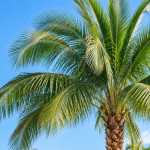
It’s a common misconception that heavily trimming a palm’s fronds before a storm makes it safer. In reality, removing healthy green fronds weakens a palm rather than protecting it. Proper pre-season palm care focuses on removing only dead or clearly dying fronds and inspecting the crown and trunk for signs of disease or structural weakness.
What to Avoid
Topping a tree, or making large, indiscriminate cuts to reduce its height, is not an effective storm-prep strategy. Topping removes the very structure that helps a tree distribute wind stress and often triggers weak regrowth that is more likely to fail in a future storm, not less.
How Treasure Coast Tree & Land Services Can Help
Treasure Coast Tree & Land Services has spent years helping Vero Beach and Indian River County property owners get their trees ready for hurricane season. Backed by 45 years of combined, hands-on experience with Florida trees, our ISA Certified Arborist and crew perform thorough pre-season inspections, targeted pruning, and structural support work designed around how each species and each tree actually responds to wind.
We provide flat-rate, no-surprise pricing, so there’s no scope creep once work begins, and we offer payment plans for larger projects. We proudly serve Vero Beach, Roseland, Sebastian, Wabasso, and Winter Beach, along with the surrounding Indian River County communities.
Frequently Asked Questions About Storm-Proofing Trees in Vero Beach, Florida
When should I schedule storm-prep tree work?
Spring is the ideal window, giving trees time to respond to pruning before hurricane season typically ramps up in June. Waiting until a storm is already forecast severely limits your options and availability.
Will pruning my trees guarantee they survive a hurricane?
No pruning strategy can guarantee a tree’s survival in extreme winds, but proper thinning, deadwood removal, and structural support meaningfully reduce the likelihood of failure and the severity of damage if a limb does come down.
Should I remove a tree just because it’s large?
Not necessarily. Size alone doesn’t determine storm risk; structure, health, and canopy density matter more. A professional assessment can determine whether a large tree needs pruning, support, or simply monitoring.
Is it true that trimming palm fronds heavily before a storm helps them survive?
No, this is a common misconception. Removing healthy green fronds weakens a palm’s structure and nutrient production rather than protecting it from wind.
What should I do with storm-damaged trees after a hurricane passes?
Have a professional assess any tree with broken limbs, leaning trunks, or exposed roots as soon as it’s safe to do so, since storm damage can create hidden hazards that aren’t obvious right after a storm.
Do you offer payment plans for larger storm-prep projects?
Yes, for larger projects we offer payment plans so major pruning or structural support work doesn’t have to wait.
How far in advance should I book an inspection given how busy hurricane season gets?
Booking as early in spring as possible is recommended, since demand for tree services increases significantly as hurricane season approaches and availability tightens.
Summary Checklist: Storm-Prepping Vero Beach Trees
| Risk Factor | Common Signs | Recommended Action |
| Dense, overgrown canopy | Little airflow, heavy foliage | Selective canopy thinning |
| Deadwood in canopy | Dead or brittle limbs | Remove before storm season |
| Structural weakness | Co-dominant stems, cracks | Cabling and bracing evaluation |
| Over-trimmed palms | Sparse crown, stripped fronds | Stop; allow proper regrowth, prune only dead fronds |
| Unknown tree condition | No recent inspection | Schedule a pre-season arborist evaluation |
Final Advice
Don’t wait for a storm warning to think about your trees. Walk your property in spring, look for deadwood, dense canopies, and signs of past damage, and schedule a professional inspection well before hurricane season gets underway. Addressing structural issues early gives your trees, and your property, the best chance of coming through the season with minimal damage.
Treasure Coast Tree & Land Services provides pre-season inspections, pruning, and structural support across Vero Beach and Indian River County. Call us for a free, no-obligation quote before the season’s first storm is on the radar.