If you’ve got a massive live oak shading half your backyard, a towering slash pine leaning a little too close to the pool cage, or a coconut palm that’s seen better hurricanes, you’ve probably already figured out this isn’t a weekend project. Large tree removal is one of the most technically demanding jobs in the tree care industry, and in Florida specifically – with the humidity, the hurricane risk, the dense canopies, and the close-quarters residential lots – it’s not the kind of work that lends itself to shortcuts or amateur attempts.
Treasure Coast Tree & Land Services handles large tree removal across Vero Beach and the surrounding Treasure Coast communities, and over the years we’ve fielded the same questions from homeowners again and again. How do you actually get a tree that big down without tearing up the yard or hitting the house? What do I need to do before the crew shows up? How much is this going to cost? This guide walks through all of it, so by the time you’re done reading, you’ll know what the work actually involves, what your role is as the homeowner, and what to expect when the trucks roll into the driveway.
What Counts as a Large Tree?
The word “large” gets thrown around a lot in tree work, but it usually means something specific. In the arboricultural industry, large tree removal typically refers to trees that meet one or more of the following criteria:
- Taller than about 60 feet.
- Trunk diameter of 24 inches or more at chest height.
- Located in a tight residential lot where straight felling isn’t possible.
- Positioned within falling distance of houses, pool cages, fences, garages, sheds, or power lines.
- Heavy enough that a single falling limb could crush a car, a shed, or a screen enclosure.
- Hazardous or structurally compromised in ways that make climbing dangerous.
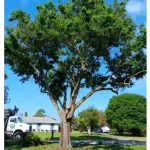
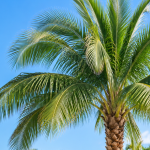
If your tree checks any of those boxes, you’re looking at a large tree removal, which means specialized equipment, ISA-trained climbers, and a real plan – not just a chainsaw and a ladder. In Vero Beach specifically, the most common large trees we work on are mature live oaks (Quercus virginiana), laurel oaks (Quercus laurifolia), slash pines and longleaf pines, large sabal palms and royal palms, mahoganies, and the occasional massive ficus or banyan that’s outgrown its space. Many of these were planted decades ago when the neighborhoods were laid out, and they’ve grown into giants that now tower over modern homes and screen enclosures.
How Large Trees Are Actually Removed
There’s no single way to remove a large tree, and the right approach depends on the specific tree, what’s around it, and how much room we have to work. Most jobs use one of four methods, sometimes in combination.
Method 1 – Straight Felling
This is the classic chainsaw-and-notch approach. A face cut is made on one side, a back cut on the other, and the whole tree falls in a controlled direction. It’s fast, it’s dramatic, and it’s almost never used in residential Vero Beach. Straight felling requires a clear drop zone roughly 1.5 times the height of the tree, which means a 70-foot tree needs about 100 feet of open landing space with nothing in it – no homes, no screen enclosures, no power drops, no fences, no neighbor’s palms. On large rural acreage or open agricultural land we can sometimes fell trees whole, but on a typical Treasure Coast residential lot, the space just isn’t there. When felling is possible, it’s the cheapest and most efficient option.
Method 2 – Sectional Dismantling
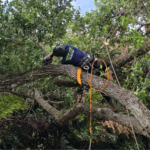
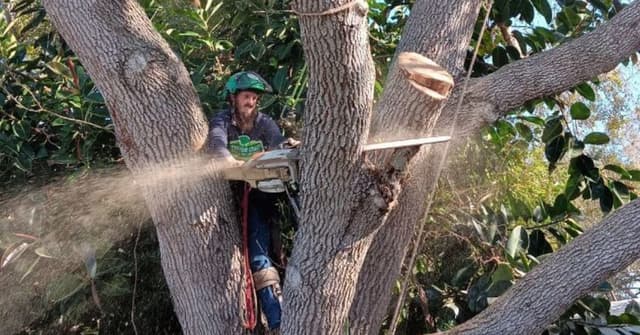
This is the method behind the majority of large tree removals in Vero Beach and the surrounding communities. A climber ascends the tree using a climbing system – saddle, ropes, and either spurs (for removals) or a rope-and-saddle climb – and takes the tree apart piece by piece from the top down. The general sequence runs like this:
- The climber works up to the top of the tree, setting rigging points along the way.
- Starting from the top, smaller branches and limbs come off first – either dropped freely if there’s clear space underneath, or lowered with ropes when there isn’t.
- Once the upper canopy is cleared, the climber begins cutting the trunk into manageable sections, typically 3 to 6 feet long, and lowers each piece to the ground with a rigging system.
- A ground crew controls each section’s descent, setting it down in a designated drop zone.
- Once the trunk is down to a stump 6 to 12 inches above ground, the climber descends and the stump is ground out – usually as part of the same job.
This method is methodical, slow by design, and extremely safe when done by trained professionals. It’s also why large tree removal isn’t cheap – there’s no shortcut to doing it right.
Method 3 – Crane-Assisted Removal
When a tree is too dangerous to climb, too close to a structure, or just too massive to dismantle conventionally, we bring in a crane. The crane operator positions the boom near the tree, the climber attaches each section to the crane’s hook, makes the cut, and the crane lifts the section away and sets it down in a drop zone – often the front yard, a neighbor’s lot, or a street. It’s faster, often safer, and lets us remove trees that would otherwise be impossible to handle by climbing alone. The University of Florida IFAS Extension specifically recommends crane-assisted removal for trees that have fallen on structures or are otherwise hazardous, because the alternative – cutting from above and hoping the sections drop in a safe direction – adds risk that doesn’t need to be there.
Cranes aren’t cheap. A crane and operator typically adds $1,500 to $4,000 to the job depending on size and duration. But for the right tree – a hazardous removal, a tree over a house, or a massive hardwood – crane work is often the difference between a controlled job and a property damage claim.
Method 4 – Bucket Truck Removal
For trees that are tall but accessible from a driveway or street, a bucket truck (cherry picker) lets our crew work from an elevated platform instead of climbing. It’s faster than climbing on the right job, especially for street-side palms and trees with limited canopy spread. The limitation is access and reach – most bucket trucks max out around 75 feet of working height, and they can’t easily get into backyards without driving across landscaping. For curbside removals, bucket trucks shine; for backyard work, climbing or crane is usually the answer.
What a Large Tree Removal Actually Includes
When you hire Treasure Coast Tree & Land Services for a large tree removal, you’re not just paying for the cutting. A complete large tree removal job includes several phases, and understanding all of them helps explain why pricing varies the way it does.
- Pre-job assessment. An ISA-trained arborist walks the property, evaluates the tree’s lean and condition, identifies dead or compromised sections, plans the removal sequence, and identifies utility lines, structures, landscaping, irrigation, and pool equipment that needs protection.
- Permitting where required. Some Vero Beach and Indian River County removals require a tree removal permit before any work begins, especially for protected specimen trees or work within city limits. We handle the permit application on your behalf when needed.
- Equipment mobilization. Trucks, chippers, cranes if needed, climbing gear, rigging, ground protection mats, and all the safety equipment have to be staged on or near your property.
- Property protection. Plywood and rubber mats over driveways to protect from heavy equipment, lawn mats to protect grass, tarps over delicate landscaping, plus protection of pool decks, screen cages, irrigation heads, and anything else sensitive.
- The removal itself. The climbing, cutting, rigging, and lowering – usually the longest part of the day.
- Chipping and haul-off. All brush gets fed into the chipper. Trunk wood is either hauled off, cut to firewood length for the homeowner, or stacked where you want it.
- Cleanup. A real tree crew rakes the work area, blows debris off driveways and walkways, and leaves the site in better condition than they arrived. You should not be picking up wood chips for the next month.
- Stump grinding. Usually included with the removal, or available as a follow-up if you decide later. Below-grade grinding means the spot is ready for sod, replanting, or building.
What You Need to Do as the Homeowner
Most homeowners assume their only job is to write the check, but there’s actually a list of things you should do before the crew arrives. Doing them well makes the job faster, safer, and sometimes cheaper.
Before the Estimate
- Take photos of the tree from multiple angles, including any dead sections, damaged areas, or hanging limbs. Send them along when you call so we can plan and quote more accurately.
- Identify your concerns. Is the tree leaning? Have you seen mushrooms at the base? Did major limbs come down in the last storm? The more we know up front, the better the estimate.
- Know your property lines. If the tree is near a neighbor’s property, we’ll need to know the line and may need permission to access their yard during the work.
Before the Crew Arrives
- Move vehicles. Cars, RVs, boats, golf carts – anything in the driveway or work zone needs to be relocated. We need room for trucks and a clear drop zone.
- Clear the yard. Patio furniture, grills, planters, pool toys, garden decorations – anything portable should go in the garage or get moved well out of the work area. We cover what we can’t move, but smaller items are safer indoors.
- Secure pets and kids. This sounds obvious, but it’s the most common safety issue. Dogs in particular tend to wander into work zones. Plan to keep them inside or off the property on removal day.
- Notify your neighbors. A heads-up about the schedule goes a long way, especially if we’ll be working near a shared property line or making noise early. Most neighbors appreciate the warning.
- Mark sprinkler heads and any underground systems. If you’ve got irrigation, low-voltage landscape lighting, or a known septic field, mark the components so heavy equipment can route around them.
- Check on permits. In some Vero Beach areas, particularly within city limits and on protected species, a tree removal permit may be required. We can help figure out what applies and handle the application, but the homeowner is ultimately responsible for compliance.
During the Job
Honestly? The best thing you can do during the removal is stay out of the work zone. Our crew leader will keep you updated throughout the day, and you’re welcome to watch from a safe distance, but please don’t approach the tree or attempt to help. Falling debris is unpredictable, and a busy crew can’t always see who’s stepping into the drop zone.
After the Job
- Walk the property with the crew leader before they leave. This is the final walkthrough – your chance to point out anything that needs more cleanup, confirm the stump situation, and verify everything looks right.
- Plan for the stump if grinding wasn’t included in the original scope. Some homeowners leave large stumps as natural seats or planters; most eventually have them ground out.
- Watch for soil settling. When a large tree is removed and the root ball decays over the next few months, the soil in that spot may settle slightly. This is normal but worth keeping an eye on, especially if you’re planning to replant.
What Large Tree Removal Costs in Vero Beach
Let’s talk numbers. Large tree removal in the Vero Beach area typically runs between $1,500 and $5,000, with most jobs landing somewhere in the $2,000 to $3,500 range. Several factors drive the price:
- Tree size. A 60-foot tree and a 90-foot tree are different jobs. Trunk diameter matters even more – a fat trunk is heavy, slow to dismantle, and hard to haul away.
- Species. Hardwoods like live oak and mahogany are denser and heavier than pines, which means more weight per section and longer chipping time. Palms have their own removal considerations and pricing patterns.
- Location and access. A tree in the front yard with truck access is cheap. A tree in a fenced backyard with no gate access, surrounded by landscaping, with a pool cage 10 feet away is a very different conversation.
- Proximity to structures. A tree 50 feet from anything is straightforward. A tree leaning over a roof or pool enclosure requires careful rigging or a crane.
- Tree condition. Counterintuitively, dead trees often cost more to remove than healthy ones. The wood is brittle, sections fail unpredictably, and climbing is riskier.
- Crane requirement. Adds $1,500 to $4,000 to the base price when needed.
- Stump grinding. Typically included with removal at Treasure Coast, but worth confirming in the quote – some companies break it out as a separate charge.
- Emergency or hurricane work. Storm-damaged trees removed on short notice typically cost more than scheduled removals – that’s standard across the industry.
The only way to get a real number is a free on-site estimate. Anyone who quotes a price over the phone without seeing the tree is either lowballing to get the job or guessing.
When to Remove a Large Tree (And When You Don’t Have To)
Not every large tree needs to come down. Sometimes pruning, cabling, or simply ongoing monitoring is enough. But there are clear signs that a tree in a Vero Beach yard is past the point of saving, and they’re worth knowing:
- More than 25% of the canopy is dead.
- Large mushrooms or fungal conks growing at the base or on the trunk – a sign of internal rot.
- A noticeable lean that’s gotten worse over time, especially with exposed roots on the upwind side.
- Deep vertical cracks in the trunk or at a major branch union.
- Hollow or drum-like sound when you tap the lower trunk.
- Roots heaving up the driveway, sidewalk, foundation, or pool deck.
- Confirmed lethal bronzing or ganoderma butt rot in a palm – both are fatal.
- Major hurricane damage that can’t be cabled or restored.
- Tree species known to be poor wind performers in Florida (laurel oak, water oak, weak-wooded pines in compromised locations).
If you’re not sure, an arborist evaluation is the right next step. According to the University of Florida IFAS Extension, many storm-damaged trees can actually be restored with proper management rather than removed – and a professional can tell the difference between the trees worth saving and the ones that need to come down.
A Quick Note on Insurance
A lot of Vero Beach homeowners are confused about when their insurance covers tree removal. The short version:
- If a tree falls on a covered structure – house, garage, shed, fence, pool cage – it’s usually covered.
- If a tree falls in your yard without hitting anything, it’s usually not covered.
- Preventative removal of a dying or risky tree is almost never covered.
- If your tree falls on your neighbor’s house, it’s usually their insurance that handles it, not yours.
Insurance coverage is highly situational and varies by carrier and policy, so always call your agent before assuming anything. We’ve worked with most of the major Florida insurers and can help document storm damage for your claim, including written assessments, photo documentation, and itemized estimates suitable for adjusters.
Helpful External Resources
UF/IFAS Gardening Solutions – Removing Trees – University of Florida Extension guidance on assessing storm-damaged trees, when to restore versus remove, and which Florida species hold up best to hurricane wind.
Florida Forest Service – State agency overseeing urban forestry, tree pest and disease alerts, and burn permit requirements for debris disposal.
Trees Are Good (International Society of Arboriculture) – ISA’s consumer-facing site with guidance on hiring qualified arborists, recognizing proper tree care practices, and verifying certifications.