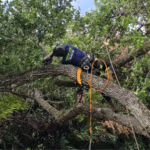
Fall tree trimming in Vero Beach, Florida, can help maintain tree health, remove damaged branches, and address potential hazards before late-season storms. The right approach depends on the tree species, its condition, and the type of pruning required. Focus on removing dead, diseased, or hazardous limbs while preserving the tree’s natural structure. Avoid excessive pruning, topping, and unnecessary palm trimming, which can weaken trees and increase stress. Before scheduling seasonal maintenance, consult a qualified arborist about the appropriate timing and pruning methods for your property.
Why Fall Is a Smart Time to Trim in Vero Beach
Fall can be a practical time to inspect and maintain trees in Vero Beach, particularly when branches show signs of damage or pose a risk to nearby structures. However, Florida’s warm climate allows many trees to grow throughout the year, so pruning schedules should account for species-specific requirements.
- Address existing tree hazards. Removing dead, broken, or weakly attached branches can reduce the risk of falling limbs during storms. A professional assessment can also identify structural defects that require attention.
- Improve property clearance. Branches growing toward roofs, gutters, driveways, and pool enclosures may need selective pruning to prevent contact with structures.
- Plan maintenance around tree health. Some trees benefit from pruning during particular seasons, while hazardous branches may require immediate attention regardless of the calendar.
For property owners considering tree trimming and pruning, an on-site evaluation can help determine which branches need attention and when the work should take place.
Preparation for Late-Season Storms
Florida’s Atlantic hurricane season officially ends on November 30, although hazardous weather can occur outside the season. Fall inspections can help homeowners identify tree defects before another period of strong winds or heavy rain.
- Look for broken branches, weak branch unions, and limbs extending over roofs or other structures.
- Check mature trees for signs of trunk damage, root disturbance, or significant leaning.
- Arrange professional pruning when an arborist identifies defects that can be addressed through appropriate cuts.
Correct pruning can help manage certain tree hazards, but it cannot guarantee that a tree will withstand hurricane-force winds. Avoid aggressive reshaping simply to make a tree appear more storm-resistant.
For additional guidance, read our blog on ‘3 ways to spot a dangerous, rotten tree before the next Florida storm.’
What to Do: Smart Fall Trimming Habits
Start by identifying dead, diseased, broken, or hazardous branches. These limbs may require removal to reduce risks to people, vehicles, buildings, and other property features.
- Remove dead or broken branches where practical and safe.
- Address limbs that interfere with roofs, gutters, chimneys, driveways, or walkways.
- Use proper pruning cuts that preserve the branch collar, the slightly raised area where a branch connects to the trunk or a larger limb.
- Assess weak attachments and crossing branches before deciding which limbs to remove.
Avoid removing healthy branches simply because they extend beyond a preferred shape. Each cut should have a clear purpose related to safety, tree health, structure, or necessary clearance.
Thin the Canopy Instead of Stripping It
Selective canopy thinning can improve light penetration and airflow when performed appropriately. The objective is to remove specific branches without unnecessarily reducing the foliage that supports the tree’s growth.
- Preserve healthy foliage. Leaves produce energy through photosynthesis, so removing too much of the living canopy can stress the tree.
- Make proper pruning cuts. Cut just outside the branch collar without leaving long stubs or cutting flush against the trunk.
- Avoid excessive thinning. Removing too many interior or exterior branches can compromise the tree’s natural structure and expose previously shaded limbs to stronger sunlight.
The amount of foliage that can be removed safely depends on the species, age, condition, and pruning objectives. There is no single percentage that applies to every tree in every situation. Follow established pruning standards and the recommendations of a qualified arborist.
For more guidance, consult the International Society of Arboriculture’s tree care resources.
Prune Florida Palms Conservatively
Florida palms need a different approach from broadleaf shade trees. Their fronds support photosynthesis, and removing healthy leaves unnecessarily can reduce their ability to maintain growth and recover from stress.
- Remove completely brown, dead fronds when appropriate.
- Retain healthy green fronds and avoid removing partially green leaves without a specific reason.
- Assess heavy fruit stalks or damaged fronds when they present a safety or maintenance concern.
- Check for unusual discoloration, trunk damage, or other signs of disease.
Palm species differ in their growth habits and maintenance requirements. Some naturally shed older fronds, while others retain dead growth for longer periods.
Our blog about the right and wrong time to trim cabbage palms explains why proper timing and conservative pruning matter for Florida’s state tree.
What to Avoid: Common Fall Trimming Mistakes
Tree trimming should improve safety and support healthy growth without removing more foliage than necessary. Several common practices can cause lasting damage, even when homeowners intend to prepare their landscapes for storms.
- Avoid removing healthy branches without a clear pruning objective.
- Do not remove excessive amounts of the canopy to make a tree appear smaller or more open.
- Never attempt hazardous overhead work from an unstable ladder or near electrical lines.
- Avoid making large cuts without understanding how they will affect the tree’s structure.
When a tree has substantial deadwood, weak attachments, or visible structural damage, seek a professional assessment rather than attempting extensive pruning yourself.
Do Not Top Trees or Use Wound Paint
Tree topping involves cutting major branches back to stubs without suitable lateral branches to assume their growth. This practice can create weakly attached shoots, increase decay risks, and permanently damage the tree’s natural structure.
Wound paint and pruning sealants are generally unnecessary for routine pruning cuts. Properly placed cuts allow trees to compartmentalize injuries naturally.
Instead, use appropriate pruning methods that preserve the tree’s structure and avoid unnecessary wounds. If a mature tree has outgrown its available space, consult an arborist about suitable alternatives to topping.
Avoid Hurricane Cuts on Palms
A hurricane cut removes most of a palm’s fronds, leaving only a small cluster near the top. Despite its name, this practice does not reliably improve storm resistance and can make palms more vulnerable to wind damage.
The University of Florida’s guidance on palm pruning explains why palms should retain a full, healthy canopy.
Keep these points in mind:
- Remove only fronds that are completely dead or otherwise require removal for safety.
- Retain healthy green and partially green fronds.
- Avoid cutting close to the trunk in ways that damage the palm’s growing tissues.
- Have an experienced professional assess palms with unusual discoloration, a damaged crown, or a softening trunk.
Trees Common to Vero Beach and How to Treat Them
Different tree species across the Treasure Coast require different pruning approaches. Consider their natural growth patterns, condition, and potential hazards before deciding which branches to remove.
- Live oaks: These trees have strong, spreading canopies, but heavy or weakly attached limbs may require attention. Pruning should preserve the tree’s natural structure and account for seasonal disease concerns.
- Sabal palms: These palms generally need minimal pruning. Remove dead fronds when appropriate while retaining healthy foliage.
- Ficus and gumbo limbo: These trees may develop dense or spreading canopies. Selective pruning can address clearance and structural concerns without destroying their natural shape.
- Citrus and mango trees: Pruning requirements depend on the species, growth stage, and fruiting cycle. Avoid unnecessary cuts that could affect fruit production.
The right approach starts with identifying the tree and understanding its condition. A qualified arborist can recommend suitable maintenance rather than applying the same pruning method to every species.
Check Local Regulations for Protected Species
Some trees and environmentally sensitive areas are subject to specific regulations in Florida. Mangroves, in particular, receive legal protection, and trimming may require compliance with state rules or authorization from the appropriate agency.
Before pruning or removing mangroves, review the University of Florida’s guidance on mangrove trimming regulations.
Property owners should also:
- Confirm property boundaries before pruning branches near neighboring lots.
- Check applicable local tree protection and permitting requirements before major removals.
- Consult the relevant authorities before working near wetlands or other protected areas.
- Obtain professional advice when the tree’s status or legal requirements are unclear.
For trees that require removal rather than pruning, contact an experienced tree service in Vero Beach, FL .
Tools, Safety, and When to Hire a Pro
Small pruning tasks may be manageable for homeowners when the branches are within easy reach from the ground. Appropriate tools include hand pruners and bypass loppers designed for the branch size.
However, some jobs present risks that require professional equipment and training.
- Do not use chainsaws from ladders or attempt to cut large overhead branches yourself.
- Never prune branches near power lines.
- Wear appropriate eye protection, gloves, and other protective equipment when performing minor ground-level work.
- Keep people, pets, and vehicles away from the work area.
- Do not attempt to control heavy or suspended branches without proper training and rigging equipment.
A branch that appears manageable from the ground may contain hidden tension or be heavier than expected. If a task involves climbing, large limbs, unstable trees, or overhead hazards, leave the work to trained professionals.
Hire Certified Experts for Heavy Work
Professional tree care is particularly important when branches hang over buildings, trees show signs of structural damage, or the work requires climbing and specialized equipment.
Look for a tree care company that:
- Employs appropriately qualified arborists.
- Maintains suitable liability insurance and workers’ compensation coverage.
- Explains the proposed pruning method and why it is necessary.
- Uses appropriate rigging, lifting, and cutting equipment.
- Provides a clear estimate and explains the scope of work.
Be cautious of contractors who recommend topping healthy trees, insist on removing healthy palm fronds, or pressure you into immediate work without explaining the risks and alternatives.
A Simple Fall Property Checklist
Before scheduling seasonal maintenance, inspect your property from the ground and document any concerns. Do not climb trees or use ladders to investigate suspected hazards.
- Inspect the Canopy: Look for dead, broken, or hanging branches.
- Check Clearances: Identify limbs touching roofs, gutters, driveways, or pool enclosures.
- Examine the Base: Look for significant cracks, fungal growth, sudden leaning, or disturbed soil.
- Evaluate Palms: Check for completely dead fronds, damaged crowns, and unusual trunk discoloration.
- Document Concerns: Photograph visible issues from a safe location and arrange a professional assessment when necessary.
This checklist can help you identify maintenance priorities without assuming that every tree needs trimming.
Partner With Treasure Coast Trees LLC
Fall is an opportunity to inspect your trees, address deadwood, improve necessary clearances, and plan maintenance before late-season storms. Treasure Coast Tree & Land Services provides professional tree trimming tailored to Florida’s climate and the needs of local tree species, including live oaks, sabal palms, ficus, and gumbo limbo.
Our team can assess your trees, recommend suitable pruning methods, and help address hazardous branches while preserving healthy growth wherever possible.
Whether you need routine seasonal maintenance, professional pruning, or an assessment of a potentially hazardous tree, we can help you determine the appropriate next steps.
Schedule a tree trimming consultation with Treasure Coast Tree & Land Services by calling (772) 404-3414 to request a free estimate.
Frequently Asked Questions
Is fall a good time to trim trees in Vero Beach?
Fall can be suitable for certain pruning tasks, especially when branches are dead, damaged, or hazardous. However, the ideal timing depends on the tree species, its condition, and the purpose of the work. Consult an arborist before scheduling extensive pruning.
How much can I safely remove from a tree?
The appropriate amount depends on the tree’s species, age, health, and structure. Avoid removing excessive living foliage in one session. A qualified arborist can determine how much pruning is appropriate for the tree.
Should I cut all the fronds off my palm before a storm?
No. Removing healthy palm fronds can weaken the palm and may increase its vulnerability to wind damage. Generally, only completely dead fronds and growth that presents a specific concern should be removed.
Do I need a permit to trim or remove a tree?
Permit requirements depend on the tree species, property location, applicable local ordinances, and the scope of work. Contact the City of Vero Beach or Indian River County authorities before undertaking major pruning or removal when requirements are unclear.
Does Treasure Coast Tree & Land Services Provide Tree Services in Vero Beach, FL, and Surrounding Treasure Coast Communities?
Yes. Treasure Coast Tree & Land Services provides tree service in Vero Beach, FL, and surrounding Treasure Coast communities. Our services include tree trimming and pruning, tree removal, and professional tree care to help maintain tree health and address potential hazards. Call (772) 404-3414 or contact our team to discuss your tree’s needs and request an estimate.