A tree risk report reveals hidden hazards that a standard home inspection may miss, including internal decay, weak branch unions, root damage, soil movement, dead limbs, and past storm injuries. While a standard home inspection may note trees affecting your roof or foundation, it typically does not assess their structural condition.
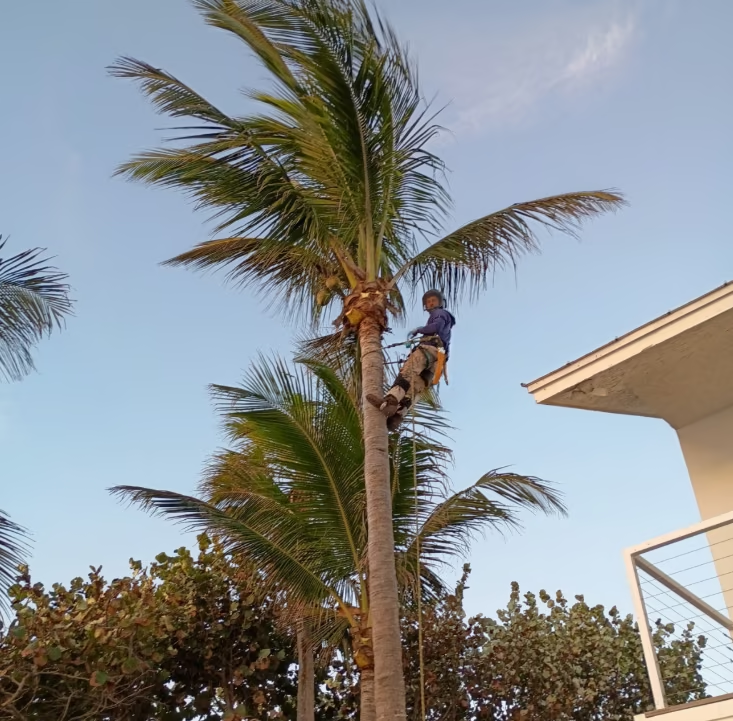
A qualified arborist evaluates individual trees to determine the likelihood of failure and identify potential targets, such as your home, driveway, or play area. These findings help you make informed decisions about pruning, support, or removal to reduce risks before storms or property damage occur.
What Does a Standard Home Inspection Cover Around Trees?
A standard inspection covers the house and its exterior components, and it reviews vegetation for its effect on the building. Under InterNACHI’s Standards of Practice, inspectors work from ground level or the eaves, and they are not required to inspect underground items or any component outside the standards. Requirements vary by state and by inspector, so it is important to read the inspector’s written scope.
An inspector may note a branch touching your roof or roots near your foundation. That observation answers whether the tree is affecting your house today. It does not answer whether the tree is likely to fall on your house during the next storm. For example, a home inspector can document that a maple stands close to your roof. A tree risk assessment goes further and asks whether that maple has decay at the base, how its limbs are attached, and what would happen to your roof if a limb let go.
What Is a Tree Risk Report?
A tree risk report is a written assessment that identifies a tree’s defects, estimates how likely the tree is to fail, and describes what it could strike. The Tree Risk Assessment Qualification (TRAQ) program by the International Society of Arboriculture (ISA) teaches a standardized, systematic process for this work, which helps assessors evaluate and communicate tree risk.
Typical reports record the species and location, the defects observed, the likelihood of failure, the targets beneath the tree, and options for reducing risk. The value is in the specifics. A report that names the defect and the target gives you something to act on or to raise in a sale.
What Can a Tree Risk Report Reveal That an Inspection May Miss?
A tree risk report can identify six problems that a home inspection is not designed to assess in detail. Each one affects whether a tree is safe to keep near the home:
- Internal decay: Cavities, fungal conks, and soft wood can weaken a trunk that looks solid from the lawn.
- Weak unions: Weakly attached branches may fail more readily. Included bark between stems of similar size is a common structural concern.
- Root damage: Trenching, grade changes, and construction can cut roots that anchor the tree.
- Lean and soil movement: Lifted soil or a new lean can signal that the root system is shifting.
- Dead wood over targets: Dead limbs above a roof, driveway, or play area can drop without warning.
- Past storm injury: Cracks and wounds from earlier storms can remain unnoticed until another storm places the tree under stress.
These are the kinds of defects an arborist evaluates when assessing whether a tree could fail and damage nearby property.
For more warning signs that can indicate a hazardous tree, read our blog about Spotting a dangerous, rotten tree before the next big Florida storm. It explains why decay and structural problems deserve your attention before severe weather arrives.
When Should You Order a Tree Risk Report?
The ideal time to request a tree risk report is before buying or selling a property with large trees, ahead of hurricane season, after a storm or lightning strike, or before starting nearby construction.
The report provides a documented assessment of potential hazards, helping you make informed decisions rather than relying on assumptions. If storm readiness is your concern, our hurricane preparation and tree safety services can help address your tree care needs.
If you are arranging an assessment after severe weather, our blog about What to check after heavy rain and wind in Vero Beach explains which warning signs you should look for and when to seek a professional evaluation.
The table below explains why each situation calls for a timely assessment.
| Situation | Why a Report Helps |
|---|---|
| Buying a home | Shows the condition of large trees while you can still negotiate. |
| Selling a home | Lets you address potential hazards before a buyer raises concerns. |
| Before hurricane season | Identifies trees that may need attention before storms arrive. |
| After a storm or lightning strike | Helps identify damage that may not be visible from the ground. |
| Before construction | Flags root zones and trees that may need protection. |
Why Do Florida Conditions Make a Tree Risk Report Worth It?
Florida storms put trees under repeated stress. Hurricane winds, saturated summer soil, and frequent lightning all test a tree’s roots, trunk, and branch unions. According to Stetson University’s lightning information, Florida experiences substantial lightning activity, making tree condition an important consideration for homeowners.
For additional preventive guidance, read our article on storm-proofing trees before hurricane season in Vero Beach. It covers warning signs and tree care measures that can help you address potential hazards before severe weather.
A report completed before storm season gives you time to act. Pruning, support, or removal that is scheduled ahead is easier to plan than emergency work after a storm. It also gives you time to discuss our recommendations and arrange suitable work before severe weather arrives.
What Should You Ask Before Ordering a Tree Risk Report?
Here are some important questions to ask before ordering a tree risk report:
- Who will perform the assessment?
- Which assessment method will they use?
- Will they provide a written report?
- What parts of the tree and surrounding area will the assessment cover?
The ISA’s Tree Risk Assessment Qualification program trains assessors in a standardized process. Ask your provider to explain the assessment method and what the report will include. A verbal opinion alone can be difficult to review, share, or use when planning tree care.
Before choosing a tree care provider, you can also read customer experiences with Treasure Coast Tree & Land Services to learn about the team’s approach to tree removal, trimming, communication, and cleanup.
How Can Treasure Coast Tree & Land Services Help After a Tree Risk Report?
At Treasure Coast Tree & Land Services, we help homeowners across Indian River County turn tree risk report findings into practical action plans. Our team can recommend appropriate solutions, including tree trimming and pruning or tree removal when necessary.
Our arborist consultations help identify potential hazards and determine suitable next steps. We also provide hurricane preparation and tree safety services to help you get ready for severe weather. Our team can assess visible tree concerns and discuss suitable next steps. If you need a post-storm evaluation or seasonal tree care, we can help you determine the right course of action.
Call (772) 404-3414 to discuss your tree service needs and request an estimate.
Frequently Asked Questions
Does a home inspector check the health of trees?
Not usually as part of a general home inspection. An inspector may note vegetation that affects the house, but a detailed assessment of tree health and structural stability is generally outside the standard inspection scope.
Can a buyer order a tree risk report before closing?
Yes, but timing depends on the purchase contract’s inspection period. Talk with your real estate agent early so the assessment can fit within the available window.
What does a tree risk report include?
It typically includes the tree’s species and location, observed defects, the likelihood of failure, potential targets, a risk rating where applicable, and options for reducing risk.
Can a healthy-looking tree still be a risk?
Yes. Decay, root damage, and weak unions can be difficult to spot from the ground. A full-looking canopy does not prove that the trunk and roots are sound.
Does a high-risk rating mean the tree must come down?
No. Depending on the tree’s condition and surroundings, pruning or other risk-reduction measures may help. Removal may be recommended when the risk cannot be reduced to an acceptable level.
How often should trees near my house be assessed?
Mature trees near your home should be checked regularly, with additional assessments after major storms, lightning strikes, construction, or visible changes in the tree or surrounding soil. Ask our team or an arborist to recommend an appropriate schedule for your property.
Does a tree risk report replace a home inspection?
No. The two serve different purposes. A home inspection evaluates the house and its major systems, while a tree risk report assesses tree defects, potential failure, and the consequences for nearby people or property.
Does Treasure Coast Tree & Land Services Provide Tree Services in Vero Beach, FL, and Surrounding Treasure Coast Communities?
Yes. Treasure Coast Tree & Land Services provides tree services in Vero Beach, FL, and surrounding Treasure Coast communities. Our services include arborist consultations, tree trimming and pruning, tree removal, and emergency tree services for damaged or hazardous trees. Call (772) 404-3414 or contact our team to discuss your tree’s needs and request an estimate.