
Almost every tree that fails during a Florida hurricane or tropical storm was already in trouble before the wind showed up. The storm gets blamed, and the wind certainly didn’t help, but the rot, the structural decay, or the compromised root system was usually there for months or years before the limb came down on the roof. The good news is that most of the warning signs are visible from the ground if you know what to look for, and catching a dangerous tree before storm season lets you handle it on your schedule and your budget instead of dealing with the consequences after the fact.
This guide walks through the three most reliable ways to spot a rotting or structurally compromised tree on a Vero Beach property- what to look for, what it means, and what to do about it. None of this requires climbing equipment or special tools. A pair of good shoes and 20 minutes per tree is all it takes to identify most serious problems on your property.
1. Check the Base of the Trunk and the Surrounding Soil
More dangerous tree failures start at the bottom than anywhere else, and the base of the trunk is where the clearest warning signs show up. Trees with significant root or trunk decay can come down in conditions that wouldn’t bother a healthy tree at all- a routine summer thunderstorm, a saturated soil event, sometimes a still afternoon with no wind. The whole point of base-of-tree decay is that the tree’s anchoring and lower structure are failing, and once that’s the case, it’s no longer a question of whether the tree comes down, but when.
Walk around the entire trunk of each tree on your property and look closely at the bottom 3 to 4 feet, plus the soil within a few feet of the base. These are the warning signs:
- Mushrooms or fungal conks growing on the trunk, on exposed roots, or out of the soil at the base. The visible mushroom is the fruiting body- the actual fungus is inside the wood, and by the time you see mushrooms, decay has usually been progressing for years. Common Florida culprits include Ganoderma (large shelf-like conks, especially deadly on sabal palms and queen palms), Armillaria (honey-colored mushrooms clustered around the base), and various other wood-decay fungi.
- Soft, spongy, or hollow-sounding wood at the base. Tap firmly around the lower trunk with the back of a hatchet or a small rubber mallet. A healthy hardwood gives back a solid, almost ringing thunk. A tree with significant interior decay sounds dull, hollow, or drum-like. You can also feel it- if the hatchet sinks into the wood instead of bouncing off, that’s a serious problem.
- Vertical cracks running up the trunk from the base. Some shallow surface cracking is normal on certain species, especially older bark on live oaks, but a crack you can stick a finger into, or one that’s clearly growing, is a structural problem. Watch for cracks that have darker discoloration around them- that often indicates active decay inside.
- A sudden lean that wasn’t there before, especially with freshly exposed soil or roots on the side opposite the lean. This is root failure in active progress. A tree that’s started leaning after the last storm and hasn’t corrected itself is in the process of falling, even if the timeline isn’t obvious yet.
- Heaving or cracked soil near the base. If you can see the ground lifted, cracked, or pulled away from the trunk on one side, the root plate is moving. This is the precursor to a full uproot, and trees showing this sign should be evaluated immediately.
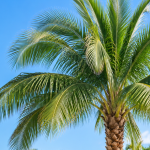
For palms- which are the most common tree on most Treasure Coast properties- the equivalent base-of-tree warning signs are slightly different. Look for softening at the base of the trunk (palms with ganoderma butt rot develop a recognizable softness on one side), a shift in trunk angle from year to year, and large brown shelf conks emerging from the base. A palm with confirmed ganoderma cannot be saved and should come down before it falls on its own.
2. Look Up- Way Up- for Dead Wood and Hanging Limbs
After checking the base, step back about 30 to 40 feet from each tree and look up. Most homeowners never actually look at their trees from this distance, which is why they miss the warning signs in the upper canopy. Dead branches, hanging limbs, and structural defects up high are some of the most common causes of property damage during storms, and they’re also some of the easiest to spot once you make the effort.
What to look for in the canopy:
- Bare or leafless branches during the growing season. On hardwoods, look for individual limbs that have lost their leaves while the rest of the tree is still full and green. On pines, look for sections that have gone brown or rust-colored. A few small dead twigs are normal, but once dead branches are over 2 inches in diameter or showing up in multiple spots throughout the canopy, the tree is signaling significant trouble.
- Hanging or broken limbs caught in the canopy. Trees damaged by previous storms often have partially detached branches that didn’t fully come down, and these are called widow-makers in the trade for a reason. They look stable from the ground but they’re held in place by friction more than structure, and the next gust of wind finishes the job- usually onto whatever is underneath.
- Tight V-shaped forks where major limbs come off the trunk. A healthy branch union forms a wide U-shape with a smooth, rounded crotch. A weak union forms a tight V with the bark turned inward, which usually means included bark- bark trapped between the two limbs instead of solid wood bonding them together. Tight V-forks on major limbs are the single most common failure point during Florida thunderstorms.
- Two codominant trunks the same size coming from a single base. Common on Bradford pears, silver maples, and certain oaks that were topped when young. Both trunks compete for dominance, the union between them is almost always weak, and the classic failure mode is one entire side of the tree splitting off in a storm.
- Cracks or splits visible at major branch unions. Any visible crack in a union is a serious warning that the union is already starting to fail. Cracks don’t heal- they get worse over time.
- Excessive weight on one side of a tree. A tree with a major limb extending way out laterally- far past the natural canopy line- is over-leveraged. That long horizontal limb puts enormous load on whatever union it’s attached to, and storm winds often shear it off.
Palms have their own canopy warning signs. Look for fewer new fronds emerging from the crown than there were last year, an off-color or yellowing of the spear (the newest unopened frond), and old fronds that haven’t released and are hanging straight down against the trunk. Healthy palms shed dead fronds cleanly; palms in distress don’t.
3. Inspect the Bark and Look for Pest or Disease Activity
The bark is the tree’s outer protection layer, and changes in the bark- combined with signs of active pests or diseases- are the third major warning category worth checking. Florida’s climate supports continuous pest pressure, and trees that are already stressed are the trees pests target first. Once an infestation is established, it can move from “tree is declining” to “tree is dead” in a matter of weeks, especially with bark beetles and palm-specific diseases.
What to look for on the bark and through the tree:
- Bark sloughing off in large sheets, exposing the wood underneath. A small amount of natural bark shedding is normal on some species, but large sections of bark falling off- especially on the trunk or major limbs- means the tissue underneath has died and the tree is in serious trouble.
- Small holes in the bark with sawdust or pitch tubes around them. These are entry points for wood-boring insects. Pine bark beetles produce popcorn-sized pitch tubes on the trunk. Ambrosia beetles leave tiny holes with thin sawdust-like material protruding from them like toothpicks. Any of these on a tree means active infestation, and the tree is often too far gone to save by the time the signs are visible.
- Sticky residue (honeydew) on the lower leaves or on items below the tree. This usually indicates a heavy scale or aphid infestation in the canopy above. Heavy scale on Florida palms can damage them significantly over time.
- Unusual leaf discoloration that doesn’t match the season. Trees naturally yellow before fall, but mid-summer yellowing, browning, or premature leaf drop on hardwoods is a sign of stress that often indicates a deeper problem- root issues, vascular disease, or pest infestation.
- Cankers- sunken, dead areas of bark with cracking around the edges. Cankers are caused by fungal infections that have killed sections of the cambium, and they progress over time. Large cankers on a trunk or major limb compromise the tree’s structural integrity in that location.
- Specific palm disease signs. Lethal bronzing (Texas Phoenix Palm Decline) shows up as premature fruit drop, then yellowing and browning of the older fronds, then the spear collapsing- and once the spear collapses, the palm is dead. Frizzle top (manganese deficiency) shows as deformed new growth at the crown. Both are diagnosable with a closer look and treatable in early stages.
What to Do If You Find Warning Signs
Finding one of these warning signs on a tree doesn’t automatically mean the tree has to come down. Some trees can be saved with treatment or cabling. Some can be made safer with strategic pruning. Some really do need to be removed, and the only question is whether you handle it on your schedule before storm season or on the storm’s schedule afterward.
Quick guidance based on what you found:
- Mushrooms or fungal conks at the base, hollow trunk, or visible major cracks: get a professional evaluation immediately. These are the warning signs most associated with sudden, no-wind failures.
- Sudden lean or heaving soil at the base: treat as urgent. The tree is in active root failure.
- Tight V-forks, codominant stems, or other structural defects on otherwise-healthy trees: cabling and bracing or weight-reduction pruning can often save the tree.
- Dead wood in the canopy or hanging limbs: schedule a trim. This is among the cheapest preventive work you can do, and it dramatically reduces storm-failure risk.
- Pest or disease signs caught early: plant healthcare treatment may save the tree, especially for palm diseases like lethal bronzing if caught before the spear collapses.
- Multiple warning signs on the same tree: take that seriously. A tree with rot at the base, dead wood in the canopy, and visible pest damage is a tree in advanced decline, and removal is usually the right call.